Table of Contents
- Summary
- What Is Cone–Rod Dystrophy?
- Key Cone–Rod Dystrophy Symptoms
- What Causes This Condition?
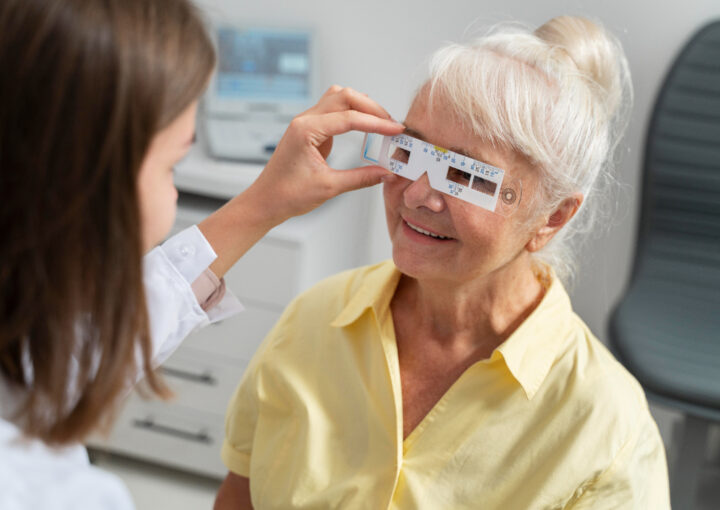
- Diagnosis: How It’s Identified
- What You Can Do: Managing Cone–Rod Dystrophy
- Low Vision Aids: Tools That Help
- Advanced Features in Low Vision Glasses
- How Vision Buddy Supports Cone–Rod Dystrophy
- Current & Future Treatments
- Living Well with Cone–Rod Dystrophy
- Final Thoughts
- Want to See If Vision Buddy Fits Your Life?
- Frequently Asked Questions
Summary
Cone-rod dystrophy (CRD) is a rare, inherited eye disorder that leads to progressive vision loss, affecting both the cone and rod cells in the retina.
Being newly diagnosed with cone–rod dystrophy can feel scary and overwhelming.
This progressive eye condition affects how you see light, colors, and your side vision. In this blog, we’ll walk you through key cone–rod dystrophy symptoms, causes, and the testing process.
You’ll also discover effective strategies for coping: from supportive low vision aids for cone rod dystrophy to the remarkable advanced features low vision glasses bring.
We’ll explore how Vision Buddy for cone rod dystrophy helps you reclaim everyday joy and highlight current and emerging treatment for cone rod dystrophy options. If you’re looking for practical answers and hope, you’re in the right place.
What Is Cone–Rod Dystrophy?
Cone–rod dystrophy (CRD) is a group of rare, inherited retinal disorders where cone photoreceptors (responsible for color and central vision) deteriorate first, followed by rod photoreceptors (responsible for low-light and peripheral vision).
CRD is rare and can occur in both children and adults. The progression and severity vary widely, but most people experience significant vision loss by early to mid-adulthood
While this condition is challenging, modern low vision solutions, especially low vision aids for cone rod dystrophy, can truly help you navigate life with confidence.
Key Cone–Rod Dystrophy Symptoms
Understanding early symptoms can speed up diagnosis and help you get the right support:
- Decreased Central Vision: Difficulty reading, recognizing faces, and seeing fine details.
- Impaired color vision: Difficulty distinguishing colors or complete loss of color perception.
- Photophobia: Heightened sensitivity to light, often making bright environments uncomfortable.
- Night blindness: Trouble seeing in low light or at night, which may develop as the disease progresses.
- Peripheral Vision Loss: Difficulty seeing to the side, potentially causing trips or falls.
- Wavy or Blurry Vision: Straight lines may appear distorted.
- Decreased visual acuity: Blurred or reduced sharpness of vision, especially when looking straight ahead.
- Blind spots (scotomas): Dark or blurry areas in the central field of vision.
- Nystagmus: Involuntary, rapid eye movements in some individuals
Tracking these cone–rod dystrophy symptoms over time helps you and your eye specialist respond proactively instead of reactively.
What Causes This Condition?
Cone-rod dystrophy is primarily caused by genetic mutations. More than 30 genes have been linked to CRD, and the condition can be inherited in several ways:
- Autosomal recessive
- Autosomal dominant
- X-linked inheritance
Because CRD is genetic, there is currently no way to prevent it or reduce your risk if you have a family history. In rare cases, cone-rod dystrophy can be part of a syndrome affecting multiple body systems.
- Most forms are autosomal recessive or dominant, meaning symptoms may begin any time from childhood to adulthood.
- Genes like ABCA4, CRX, GUCY2D, and PRPH2 are often implicated.
- Genetic testing may be recommended to identify your type and assess family risk.
Even though the genetic roots can’t be reversed yet, an accurate diagnosis empowers smarter lifestyle choices and access to risk-mitigating support tools.
Diagnosis: How It’s Identified
If you or a loved one are experiencing cone rod dystrophy symptoms, a prompt diagnosis is key. Here’s what the process typically involves:
- Eye Exam: Vision acuity, color tests, contrast checks.
- Retinal Imaging: OCT scans reveal structural retinal changes; autofluorescence exposes dying cells.
- Visual Field Tests: Track peripheral vision loss.
- Electroretinogram (ERG): Measures the electrical activity of the retina in response to light. This test is crucial for confirming CRD, as it can distinguish between cone and rod cell function.
- Genetic Testing: Pinpoints the exact subtype for family planning and potential clinical trials.
- Family history review: To determine inheritance patterns.
Early diagnosis allows for better planning and access to support resources, including low vision aids for cone rod dystrophy
What You Can Do: Managing Cone–Rod Dystrophy
Though CRD is progressive and currently incurable, you’re not powerless. Here’s how you can proactively manage it:
- Protect your eyes: Wear sunglasses with UV protection. Reduce glare indoors.
- Maximize your environment: Use bright, consistent lighting; enlarge phone text; add contrast to household tools.
- Explore low vision aids: From handheld magnifiers to electronic low vision glasses, find what works for you.
- Stay active: Exercise, maintain social connection.
- Medical monitoring: Keep up with eye exams and use supplemental vitamin therapy if prescribed.
- Stay informed: Learn about your condition and available resources.
- Seek support: Join support groups and connect with others facing similar challenges.
It’s more than coping, it’s about living well and intentionally.
Low Vision Aids: Tools That Help
The right devices can help with reading, mobility, and daily tasks. Common aids include. Low vision aids for cone rod dystrophy come in many forms:
- Magnifiers: Handheld, stand, or dome magnifiers for reading and close work.
- CCTV Magnifiers: Desktop cameras that project large text.
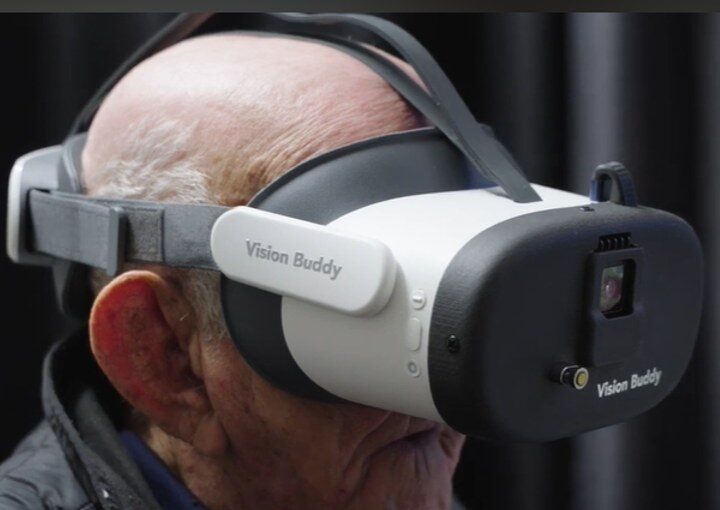
- Wearable low vision glasses: Advanced smart glasses with magnification, contrast adjustment, and scene description features
- Electronic video magnifiers: Portable or desktop devices that enlarge and enhance text and images.
- Tinted lenses: Reduce photophobia and glare, improving comfort in bright environments.
- SEE-TV binocular telescopes: Help with distance viewing, such as watching television.
- Screen readers and audio devices: Convert text to speech for easier access to information.
Among these, advanced features low vision glasses like Vision Buddy add indispensable value, making tasks like watching TV, reading, and recognizing faces vastly more doable.
Advanced Features in Low Vision Glasses
Modern low vision glasses include features you might find in Vision Buddy and other advanced devices:
- Contrast and color adjustment: Enhances visibility of text, images, and objects based on user preference.
- Variable zoom and magnification (6x–24x)
- Scene-based optimization for text, faces, or navigation
- Autofocus and light adjustment to adapt in real time
- Comfort design for prolonged wear
- Simple voice-activated or remote controls
- AI-powered text recognition: Instantly reads printed text aloud, making books, menus, and labels accessible.
- Hands-free operation: Voice commands and touchpad controls for seamless use.
- Connectivity: Some models offer WiFi, Bluetooth, and even TV streaming capabilities
How Vision Buddy Supports Cone–Rod Dystrophy
Vision Buddy for cone rod dystrophy harnesses these advanced features and integrates a key capability: seamless streaming from TV and digital devices.
Here’s how it helps:
- Streaming + Magnification: Watch HD shows or read enlarged text from books or labels.
- Adjustable settings: Customize magnification, contrast, and color to suit your preferences and needs.
- Lightweight and ergonomic: Comfortable for hours of reading, crafting, or browsing.
- Plug-and-play simplicity: Easy setup, no tech frustration.
- Affordable alternative: A compelling top eSight alternative or best IrisVision alternative, but focused on your daily passions.
- Live TV streaming: Streams television directly to the headset, making it easier to enjoy entertainment without straining your eyes.
- Easy to use: Simple controls and intuitive interface make it accessible for all ages
The result? You get a real-world improvement, not just a gadget.
Current & Future Treatments for Cone–Rod Dystrophy
While there’s no cure yet, staying informed and part of a supportive low vision community ensures you won’t miss opportunities as science advances.
Here’s a realistic look at therapy options:
- Nutritional supplements: High-dose antioxidants (AREDS formulas) might slow progression.
- Gene therapy: Companies focus on opsin or ABCA4 mutations. Early developmental stage.
- Stem cell implants: Retinal patches are entering human trials.
- Retinal Prostheses: External implant experiments are underway.
- CRISPR-based therapies: Making early-stage progress in preclinical labs.
- Protective eyewear: Tinted glasses or edge filters reduce light sensitivity and photophobia.
- Low vision aids: Magnifiers, electronic readers, and advanced low vision glasses support daily activities.
- Microcurrent stimulation: Emerging therapies like transorbital alternating current stimulation (tACS) show promise in improving retinal function and slowing progression, though more research is needed.
- Supportive care: Genetic counseling, support groups, and rehabilitation services are vital for emotional and practical support
Living Well with Cone–Rod Dystrophy
Beyond devices and treatments, your mindset matters:
- Build routines: Adapt your writing, reading, and lighting habits into predictable patterns.
- Seek support: Connect with low vision therapists, support groups, or organizations like AFB or RNIB.
- Stay active: Physical fitness improves mood and independence.
- Expand horizons: Audio books, voice tech, tactile hobbies—all open new paths.
- Continue inner work: Adjust emotionally through counseling or meditation.
- Organize your environment: Keep frequently used items in consistent places.
- Use contrasting colors: High-contrast labels and markings make objects easier to see.
- Maximize lighting: Use adjustable lamps and avoid glare.
- Leverage technology: Use smartphones, tablets, and smart home devices with accessibility features.
This is a journey, it’s about rediscovering joy and living intentionally.
Final Thoughts
Being diagnosed with cone–rod dystrophy may feel overwhelming, but it doesn’t have to define your life.
By recognizing cone–rod dystrophy symptoms, exploring treatment for cone rod dystrophy, and adopting supportive low vision aids for cone rod dystrophy, you can build a meaningful, vibrant life.
Vision Buddy is a transformative choice within a smart low vision toolkit. Its user-first design, advanced features low vision glasses need, and confident approach to daily living make it more than just a device, it’s a companion on your journey.
Want to See If Vision Buddy Fits Your Life?
Learn how Vision Buddy can help you or a loved one thrive with cone–rod dystrophy. See live demos, success stories, and how easy setup can be, so you can reclaim joy, clarity, and independence.
Frequently Asked Questions
- Can cone-rod dystrophy be prevented?
No, it is a genetic condition, so prevention is not currently possible. - Are there any cures?
There is no cure, but treatments and low vision aids for cone rod dystrophy can help manage symptoms and maximize remaining vision. - What’s the best low vision aid for cone rod dystrophy?
The best aid depends on your specific needs. Many people benefit from advanced features low vision glasses, electronic magnifiers, and devices like Vision Buddy for cone rod dystrophy. - Is gene therapy available?
Gene therapy is still in the research phase, but early results in animal studies are promising. - How can I find support?
Reach out to vision specialists, genetic counselors, and organizations dedicated to retinal diseases. Online and local support groups can also be invaluable.