

Summary
On Sunday, November 1, clocks in most of the United States move back an hour, and the evenings suddenly arrive earlier.
For many older adults, that is when a quiet problem becomes obvious: it is harder to see after dark than it used to be.
Trouble seeing in dim light is common with age, but it is not something to simply accept, because sometimes it is an early sign of an eye condition that can be treated. This guide covers why it happens, what to watch for, and what helps.
Why Eyes Need More Light with Age
Seeing in low light is a demanding job for the eye. As we age, several things change at once.
The pupil tends to open less in the dark, so less light reaches the retina.
The natural lens gradually yellows and clouds, which scatters light and increases glare from headlights, streetlights, and lamps. The retina’s ability to adjust from bright to dim surroundings also slows down.
The result is that a hallway that felt fine at 55 can feel dim at 75.
These changes are normal, but they are also the point at which hidden eye conditions tend to show up first, which is why night trouble deserves attention.
Common Causes of Poor Night Vision
Several conditions can make seeing in dim light harder. Some of the most common in older adults:
- Cataracts: clouding of the lens causes glare, halos around lights, and dimmer vision, and worsening night vision is often one of the first signs.
- Glaucoma: damage to the optic nerve can narrow peripheral vision, which makes dim spaces harder to navigate. Some glaucoma eye drops can also make dim light harder to manage.
- Age-related macular degeneration: it mainly affects central vision and contrast, and trouble in low light can appear early.
- Diabetic eye disease: damage to retinal blood vessels can reduce vision in dim conditions.
- Uncorrected vision problems: an out-of-date glasses prescription or untreated astigmatism can make night vision worse.
- Dry eye and certain medications: both can add blur and glare in low light.
- Vitamin A deficiency: rare in the United States, but possible for people with conditions that affect nutrient absorption. Do not start supplements without a doctor’s advice, since too much vitamin A can be harmful.
Related reading: Low Vision After Cataract Surgery: What Helps When Surgery Alone Isn’t Enough (/low-vision-after-cataract-surgery/)
Warning Signs Worth a Doctor Visit
Not every dim-light struggle means disease, but some patterns are worth raising with an eye doctor sooner rather than later:
- Needing much more light than before to read or do everyday tasks
- Halos or starbursts around lights, or new glare that bothers you
- Tripping on steps or curbs in low light, or misjudging distances after dark
- Taking a long time to adjust when moving from a bright space to a dim one
- Avoiding going out in the evening because it feels unsafe
- Night vision that is clearly getting worse over weeks or months
Sudden changes in vision, new flashes of light, a curtain or shadow over part of your sight, or sudden loss of vision are different.
Those need urgent care, so contact an eye doctor or seek emergency help right away.
A comprehensive dilated eye exam can check for cataracts, glaucoma, macular degeneration, and diabetic eye disease, and can also confirm whether a new prescription would help.
Safer Evenings at Home
You do not need to wait for a diagnosis to make home safer after dark.
Falls are a leading concern for older adults, and low light makes them more likely, which is why this overlaps closely with fall prevention.
- Put night lights or motion-sensor lights along the route between the bedroom and bathroom
- Use higher-wattage or brighter LED bulbs in hallways, stairs, and entryways, and keep lighting consistent from room to room so your eyes do not need to keep readjusting
- Mark the edges of steps with high-contrast tape or paint
- Keep walkways clear of cords, rugs that slide, and clutter
- Place a flashlight where you can find it in the dark
- Light switches at both ends of a hallway or staircase make a real difference
Related reading: How Low Vision Increases Fall Risk, and What Actually Helps (/low-vision-fall-risk-prevention/)
Smart Lighting Habits That Help
Small habits add up. Plan trips outside for daylight hours when possible.
Ask a family member or friend to drive, or use a ride service, for evening events if night travel has become stressful. Keep glasses clean and up to date.
Turn on lights before the sun goes down rather than waiting until the room is already dark, since eyes adjust more easily to gradually changing light.
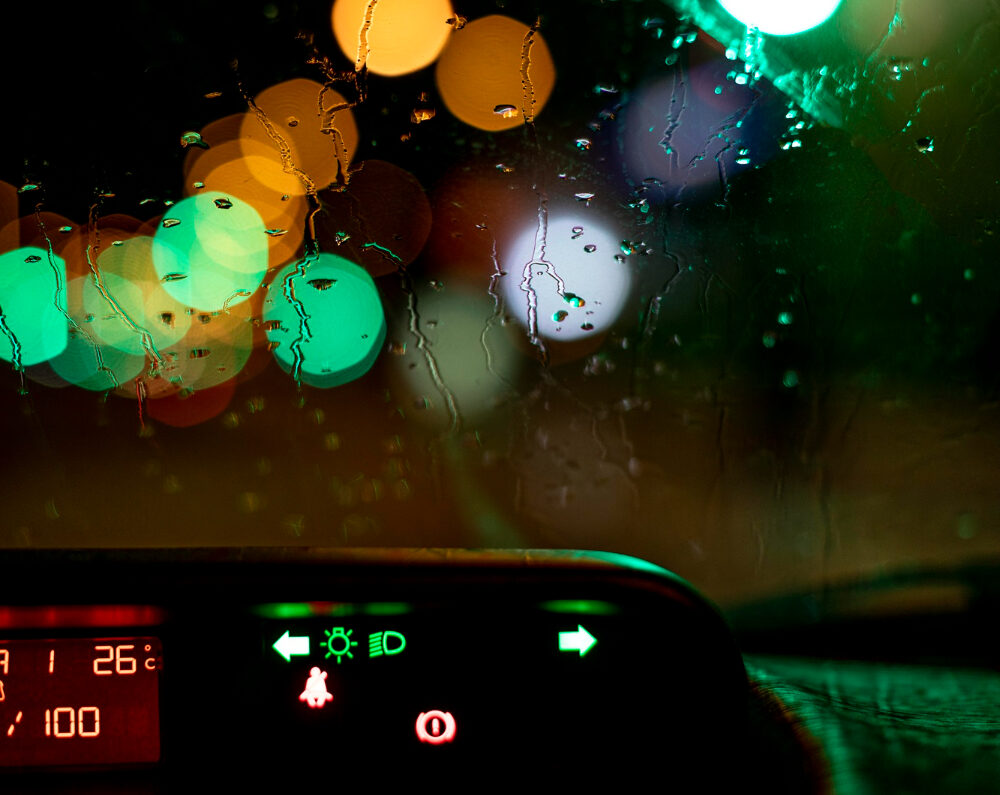
If you have noticed difficulty driving at night, bring that up with your eye doctor directly. It is a safety question worth a professional answer, and often there is a treatable reason.
When Night Trouble Points to a Specific Condition
For some people, difficulty in the dark is part of a broader pattern of low vision. Conditions such as retinitis pigmentosa, which often starts with trouble seeing at night, are a good example.
If evening vision problems come with other changes, such as blurred or distorted central vision, missing patches, or a shrinking field of view, it is worth getting a full evaluation.
For people who are already living with low vision, technology can help with the indoor tasks that get harder as the day fades, such as reading mail or recognizing a familiar face across the living room.
Wearable devices with real-time magnification and contrast enhancement are one option to explore, though they work with the vision you have and are not a treatment for the underlying condition.
Related reading: Retinitis Pigmentosa and Night Vision: What Helps When It Gets Dark (/retinitis-pigmentosa-and-night-vision/)
Frequently Asked Questions
Is it normal to have trouble seeing at night as you get older?
Some decline in dim-light vision is a normal part of aging. But it can also be an early sign of cataracts, glaucoma, macular degeneration, or diabetic eye disease, so a noticeable change is worth an eye exam.
What causes sudden night vision problems?
Sudden changes in vision need urgent medical attention. Gradual changes are more commonly linked to cataracts, glaucoma, macular degeneration, or an out-of-date prescription.
Can vitamin A improve night vision?
Vitamin A supplements help only when someone has a deficiency, which is uncommon in the United States. Too much vitamin A can be harmful, so talk to a doctor before taking supplements.
What kind of light is best for people with trouble seeing in the dark?
Bright, even lighting with minimal glare works best for most people. Night lights along routes, motion-sensor lights, and well-lit stairs help. Individual preferences vary, so try adjustments and notice what helps.
Should my parent still drive at night?
That is a question for their eye doctor and primary care provider. If night driving has become stressful or frightening, encourage an eye exam and talk about alternatives such as daytime driving, rides from family, or ride services.
What to Do Next
If dim-light trouble is part of a bigger change in how you or someone you love sees, it helps to talk it through with people who understand low vision. The Vision Buddy team can explain what different devices do and which may suit your daily routine. Reach the Vision Buddy team at hello@visionbuddy.com or (833) 787-2020, or send a message through the contact form on visionbuddy.com.