

Vision Buddy

Can Eyesight Be Restored After Optic Nerve Damage? Here’s What We Know

  • Published by Admin
  • Published Date: July 17, 2025
  • Category: Eye Diseases

10 Min Read

Headshot of Maya Williams

Maya Williams

Table of Contents

  1. Summary


  2. What is the Optic Nerve and Why Is It So Important?


  3. What Causes Optic Nerve Damage?


  4. Can Eyesight Be Restored After Optic Nerve Damage?


  5. Current Treatments and Emerging Research


  6. Role of Glasses for Optic Nerve Damage and Legal Blindness


  7. How Glasses for Legally Blind Individuals Can Help


  8. Living with Vision Loss: Legal Blindness and Quality of Life


  9. Best Low Vision Aids for Optic Nerve Damage


  10. The Future of Vision Restoration: Hope on the Horizon


  11. How Vision Buddy Supports People with Optic Nerve Damage


  12. Final Thoughts

Summary

Optic nerve damage is a serious condition that often leads to permanent vision loss and, in many cases, legal blindness. 

It occurs when the nerve fibers transmitting visual information from the eye to the brain are injured or degenerate. The question on everyone’s mind is: Can eyesight be restored after optic nerve damage?

This blog explores what the optic nerve does, the causes of damage, current medical options, and how assistive technology like Vision Buddy and low vision aids for optic nerve damage can help individuals lead fuller, more independent lives.

What is the Optic Nerve and Why Is It So Important?

The optic nerve is like a high-speed internet cable connecting your eyes to your brain. It carries the visual information your eyes receive and delivers it to the brain to create images.

There are over 1.2 million nerve fibers in each optic nerve. Damage to any of these fibers is irreversible because, unlike other parts of the body, the optic nerve cannot regenerate naturally. Once those pathways are broken, the visual signals can’t be transmitted properly, leading to partial or full vision loss.

Optic nerve damage can manifest as:

  • Reduced visual acuity
  • Loss of peripheral vision
  • Color vision defects
  • Visual field defects (blind spots)

What Causes Optic Nerve Damage?

Damage can happen suddenly or gradually and may be caused by a variety of health issues, including:

  • Glaucoma: One of the most common causes of optic nerve damage due to high eye pressure.


  • Optic Neuritis: Inflammation of the optic nerve, often linked to multiple sclerosis.


  • Ischemic Optic Neuropathy: Loss of blood flow to the optic nerve.


  • Trauma or Injury: Physical damage from accidents or surgery.


  • Tumors: Pressing on the nerve or obstructing blood flow.


  • Genetic Conditions: Such as Leber’s hereditary optic neuropathy.


In all these cases, the extent of the damage, and whether it’s reversible, depends on how early the problem is diagnosed and treated.

Can Eyesight Be Restored After Optic Nerve Damage?

This is a hopeful and heavily searched question for a reason.

Here’s the honest truth:

  • Right now, there is no guaranteed way to restore vision after optic nerve damage.


  • The optic nerve doesn’t regenerate naturally like other nerves in the body.


  • Treatments focus more on stopping further damage rather than reversing it.


However, there is encouraging news. Research shows that:

  • The brain has some capacity to adapt and improve the use of remaining vision through neuroplasticity.


  • Certain therapies can activate residual vision, improving visual performance even if the nerve itself is damaged.


  • Early intervention after injury or inflammation can improve outcomes and prevent further damage

While full restoration may not be possible yet, early treatment, assistive technology, and low vision aids for optic nerve damage can significantly improve quality of life and functional vision.

Current Treatments and Emerging Research

If you’ve recently been diagnosed, the good news is that medical science is catching up with the complexity of this condition.

Medical Treatments

  • Steroid therapy: Used especially in optic neuritis to reduce inflammation and speed recovery, though it doesn’t guarantee full vision restoration.


  • Plasma exchange therapy: Sometimes used when steroids fail, but evidence is limited.


  • Surgery: Endoscopic optic nerve decompression can relieve pressure in traumatic optic neuropathy and improve vision in some cases, especially if done early.

Visual Restitution and Electrostimulation

  • The Savir method combines daily vision training with non-invasive brain electrostimulation to improve visual function by activating residual vision pathways.


  • This therapy leverages the brain’s learning ability to enhance vision despite nerve damage.

Research Frontiers

  • Scientists are investigating molecular pathways that regulate nerve cell death and regeneration, hoping to develop drugs that can protect or regenerate optic nerve cells.


  • Experimental approaches include stem cell therapies and gene modulation, but these remain in early stages.

Role of Glasses for Optic Nerve Damage and Legal Blindness

While glasses cannot repair optic nerve damage, specially designed glasses for optic nerve damage can help optimize remaining vision. These glasses often incorporate:

  • High contrast lenses: To improve clarity and reduce glare.
  • Magnification: To enlarge images and text.
  • Tinted lenses: To reduce light sensitivity common in optic nerve disorders.

For individuals with legal blindness, glasses alone may not suffice, but they remain an important part of a comprehensive vision support strategy.

How Glasses for Legally Blind Individuals Can Help

For those classified as legally blind, glasses for legally blind individuals often incorporate advanced features tailored to specific visual deficits:

  • Custom prescriptions that optimize any usable vision.
  • Filters and coatings that reduce glare and improve contrast sensitivity.
  • Combination with other low vision aids to create a multi-layered approach to vision support.

Consulting a low vision specialist is essential to find the right glasses and complementary aids to enhance quality of life.

Living with Vision Loss: Legal Blindness and Quality of Life

Many people affected by optic nerve damage fall under the category of legally blind, but that doesn’t mean total blindness.

Legal blindness is defined as:

  • Visual acuity of 20/200 or less in the better eye, even with correction.


  • Or a visual field of 20 degrees or less (tunnel vision).


Most people with legal blindness still have residual vision, and with the right glasses for legally blind individuals or visual aids, they can live, work, and thrive independently.

Best Low Vision Aids for Optic Nerve Damage

If you’re not a candidate for medical treatments, or are waiting for clinical advancements, there’s still a lot you can do to improve your daily life.

Here are the best low vision aids for optic nerve damage that people are using today:

1. Magnifying Glasses & Telescopic Glasses

  • These help enlarge nearby or distant objects.


  • Ideal for reading, recognizing faces, and watching TV.


2. Electronic Video Magnifiers

  • These devices use cameras and displays to enhance images.


  • Often equipped with contrast modes, color inversion, and zoom.


3. Screen Readers and Voice Assistants

  • Apps like VoiceOver or TalkBack convert text into audio.


  • Essential for smartphones, tablets, and computers.


4. Wearable Vision Tech (like Vision Buddy)

  • Designed specifically for people with severe vision loss.


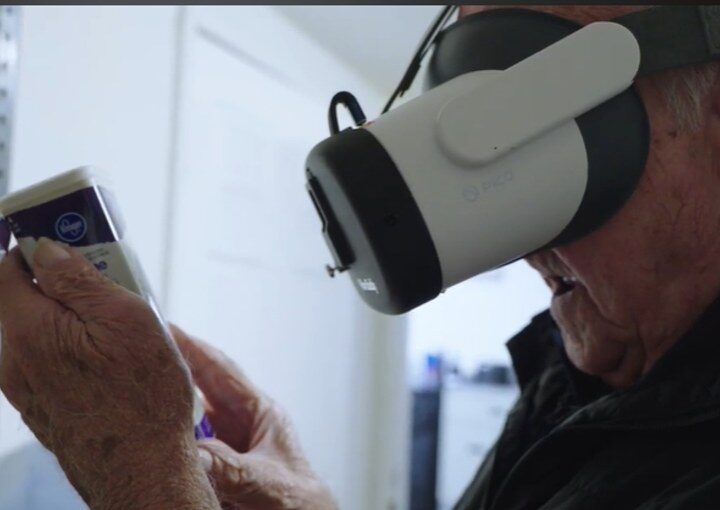
  • Offers magnification, TV streaming, text reading, and live view features all in one headset.


We’ll dive into that more next.

The Future of Vision Restoration: Hope on the Horizon

Though optic nerve damage remains largely irreversible today, ongoing research offers hope:

  • Experimental drugs like statins show promise in protecting nerve cells from degeneration.


  • Advances in gene therapy and stem cell research may one day enable regeneration of optic nerve fibers.


  • Neuroplasticity-based therapies like the Savir method offer practical improvements in vision today.

Meanwhile, combining medical treatment with glasses for optic nerve damage and low vision aids for optic nerve damage provides the best opportunity to maintain independence and quality of life

How Vision Buddy Supports People with Optic Nerve Damage

Here’s where assistive technology becomes a game-changer.

Vision Buddy is the world’s first wearable TV watching system designed specifically for the visually impaired. But it’s more than a TV device, it’s an all-in-one low vision aid that helps people with optic nerve damage regain confidence in their daily lives.

Key Features That Help:

  • TV Mode: Watch cable or streaming content wirelessly on a huge virtual screen.


  • Magnification Mode: Zoom in on people’s faces, books, food menus, and more.


  • Reading Mode: Read text with enhanced contrast and sharpness.


  • Live Mode: See your surroundings in real-time with enhanced clarity.


Why Vision Buddy Works for Optic Nerve Damage

Vision Buddy doesn’t try to cure optic nerve damage. Instead, it enhances your remaining vision by making everything bigger, brighter, and easier to process. Think of it as putting the best parts of a magnifier, smart glasses, and screen reader into one wearable device.

Final Thoughts

So, can eyesight be restored after optic nerve damage?

Not yet, but that doesn’t mean you’re without options.

With a mix of early diagnosis, ongoing research, and powerful assistive tech like glasses for optic nerve damage or devices like Vision Buddy, there is real hope for a life with more independence and less frustration.

If you or a loved one is facing vision loss due to optic nerve damage, early diagnosis and intervention are vital. Explore available treatments, consult with low vision specialists, and consider assistive technologies that can empower your daily life. Though the road to full restoration is still under research, the combination of hope, innovation, and practical support can make a meaningful difference.

Vision loss doesn’t mean the end of seeing, it just means finding new ways to do it.

Ready to Try Vision Buddy?

If you’re navigating life with optic nerve damage or legal blindness, don’t wait. Discover how Vision Buddy can make everyday tasks simpler, clearer, and more enjoyable.

Disclaimer: This blog is for informational purposes only. Always consult a medical professional or low vision specialist for personalized advice.