Table of Contents
- Summary
- What Is Ocular Albinism?
- Key Albinism Symptoms Affecting Vision
- How Vision Is Affected: What You See
- Living with Ocular Albinism
- Common Treatments for Ocular Albinism
- Low Vision Aids: Making Life Easier
- Vision Buddy for Ocular Albinism
- Tips for Daily Living and Long-Term Well‑Being
- Encouragement for Parents and Individuals
- Final Thoughts
Summary
Albinism is a rare genetic condition that affects the production of melanin, the pigment responsible for coloring the skin, hair, and eyes.
While most people recognize albinism for its impact on appearance, its effects on vision are often less understood but can be life-altering.
From light sensitivity to reduced depth perception, everyday tasks can become frustrating.
In this blog, we uncover the most important albinism symptoms, delve into why these issues happen, and explain what treatments are available.
Most importantly, we explore low vision aids for ocular albinism, including how Vision Buddy for ocular albinism can support clarity and comfort. By the end, you’ll feel equipped with practical solutions and hope for a brighter visual future.
What Is Ocular Albinism?
Ocular albinism affects the eyes more than the skin. It results from a genetic mutation that disrupts melanin production in the eyes, leading to underdeveloped retinal structures and abnormal visual pathways.
While skin coloring may be mild, individuals with ocular albinism often experience more profound visual challenges than those with general albinism.
There are two main forms:
- Oculocutaneous albinism (OCA): Affects skin, hair, and eyes.
- Ocular albinism (OA): Primarily affects the eyes, with minimal or no changes to skin and hair color.
Both forms can cause significant visual challenges, but ocular albinism is especially known for its impact on eyesight, while the person’s skin and hair may appear typical for their family or ethnic background
According to research, ocular albinism impacts approximately 1 in 50,000 individuals and affects males more often due to its usual X-linked inheritance pattern.
Key Albinism Symptoms Affecting Vision
General Albinism Symptoms
- Very pale skin that burns easily in the sun
- Light-colored hair (white, blond, or light brown)
- Light-colored eyes (blue, gray, or hazel)
- Vision problems: The hallmark of both OCA and OA
These albinism symptoms often appear in early childhood and remain stable throughout life, though they can impact daily activities, learning, and independence.
Ocular Albinism Symptoms
When people search for albinism symptoms, here are the ones most likely to impact daily life:
- Nystagmus – Involuntary eye movements that make it hard to focus steadily
- Photophobia – Extreme sensitivity to light and glare
- Reduced Visual Acuity – Difficulty with sharp central vision
- Strabismus – Misaligned eyes (crossed or wandering)
- Foveal Hypoplasia – Underdevelopment of the central part of the retina
- Reduced Depth Perception – Challenges judging distance or seeing 3D
- Refractive Errors – Nearsightedness or farsightedness needing correction
- Oscillopsia – Perception that stationary objects are moving
- Abnormal head movements to compensate for visual challenges
These symptoms can make reading, walking, watching TV, or even recognizing smiles feel challenging. And while clarity may be limited, there are many ways to support and improve visual function.
How Vision Is Affected: What You See
Visual issues with ocular albinism stem from two main causes:
Malformed Retinal Structure:
The fovea, responsible for detailed vision, doesn’t develop properly. Light entering the eye fails to form a crisp, focused image.
Misrouted Visual Pathways
Some optic nerve fibers cross incorrectly, confusing the brain’s interpretation of visual signals. This disrupts depth perception and fine detail.
In real-world terms, this translates to:
- Soft or fuzzy vision, even with strong prescription lenses
- Squinting or head-tilting to improve focus
- Needing magnifiers, large fonts, and glare control
- Difficulty navigating crowded environments or low-contrast areas
- Underdeveloped fovea: The central part of the retina responsible for sharp vision doesn’t form properly, resulting in reduced visual acuity.
- Iris transillumination: The iris lacks pigment, allowing extra light into the eye, which causes glare and photophobia.
- Abnormal optic nerve pathways: Signals from the eyes to the brain may be misrouted, affecting depth perception and coordination.
- Refractive errors: Astigmatism, nearsightedness (myopia), or farsightedness (hyperopia) are common.
- Nystagmus and strabismus: Both further reduce visual clarity and may require compensatory head postures
These challenges are all too real, but understanding them is the first step toward managing them effectively.
Living with Ocular Albinism
People with ocular albinism can lead full and active lives, but they often face unique challenges:
- Educational adjustments: Children may need large-print materials, seating close to the board, and extra time for visual tasks.
- Social and emotional support: Understanding and acceptance from family, peers, and educators are vital.
- Mobility and independence: Navigating unfamiliar environments or bright outdoor settings can be difficult due to light sensitivity and reduced depth perception.
Supportive communities, advocacy organizations, and vision specialists play a key role in helping individuals and families adapt.
Common Treatments for Ocular Albinism
While there’s no cure for the underlying genetics, there are key treatment for ocular albinism options that significantly improve quality of life:
- Prescription Lenses: Tinted and refractive lenses correct focusing errors, reduce glare, and improve contrast
- Sunglasses and Hats: UV-protective gear helps manage photophobia outdoors
- Eye Alignment Therapy: Patching, exercises, or surgery to treat strabismus
- Vision Therapy: Strengthens eye coordination and focusing ability
- Low vision aids: As detailed above, these are central to daily functioning.
- Surgical options: In some cases, surgery may be considered to minimize nystagmus or correct strabismus, though these procedures rarely improve visual acuity and are more for comfort and alignment.
- Low Vision Rehabilitation: Working with specialists to integrate assistive tools and strategies
These measures are often effective on their own, but combining them with the right low vision aids can bring even greater benefit.
Low Vision Aids: Making Life Easier
Low vision aids for ocular albinism are transformative for maximizing independence and quality of life. These devices are designed to address the specific visual challenges associated with albinism symptoms:
- Handheld & Reading Magnifiers: Affordable and easy to use, but require strong hands
- Table-top CCTV Magnifiers: Magnify books or pictures on-screen, great for stationary use
- Wearable Low Vision Glasses: Use cameras to enhance text, images, depth, and contrast
- Smart Lenses & Electronic Wearables: New tech that brings dynamic augmentation to daily life
- Adaptive Technology: Screen readers, speech-to-text tools, and voice controls
- Tinted glasses or sunglasses: Reduce glare and photophobia, making outdoor activities more comfortable.
- Bioptic telescopes: Mounted on glasses to improve distance vision, such as for watching TV or seeing classroom boards.
- Iris-tinted contact lenses: Special contacts that reduce light sensitivity and improve appearance by mimicking a natural iris.
- Screen readers and audio devices: Convert text to speech for easier access to information
These aids reduce strain, boost clarity, and create opportunities for independence in reading, hobbies, work, and leisure.
Vision Buddy for Ocular Albinism
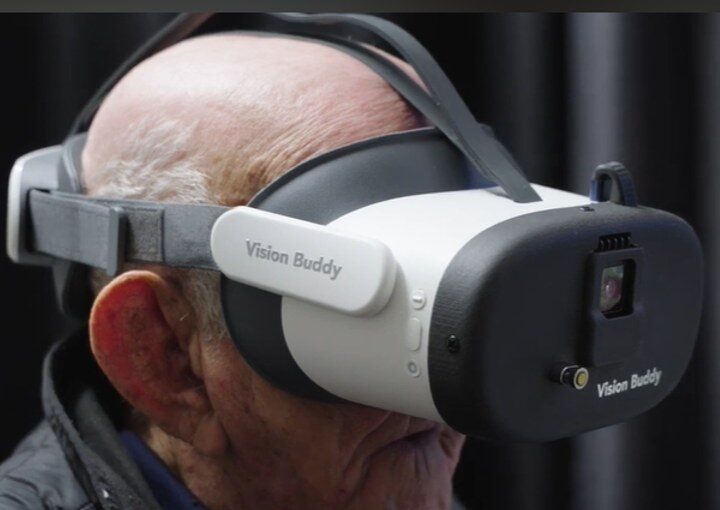
One standout option in this category is Vision Buddy for ocular albinism, a wearable system designed for both comfort and clarity. Here’s why it’s capturing attention:
- Adjustable Contrast & Magnification
With custom contrast modes and configurable zoom (up to 10x), Vision Buddy helps sharpen your view, whether you’re reading, crafting, or watching TV. - Sunshine Control
Bright light? Flip on a dimming filter or reduce glare, all from the push of a button. - Lightweight & Comfortable
Weighing under 400g, it’s more like glasses than a head-mounted device. Soft straps and balanced weight mean you can wear it comfortably all day. - Intuitive Controls
Features are controlled by a remote or voice activation, no confusing menus or setups. - Multitasking
Seamlessly switch between magnifier mode and streaming mode. Read a book, then flip over to a TV show without changing devices. - Support & Training
Vision Buddy comes with personalized onboarding and learning sessions, making it easy to integrate into daily life right away. - Adjustable settings
Users can customize magnification, contrast, and color to suit their unique needs. - Simple controls:
Intuitive interface makes Vision Buddy for ocular albinism accessible for all ages.
If you’re searching specifically for Vision Buddy for ocular albinism, you’ll find a device that’s designed to do more than just magnify, it’s designed to empower.
Tips for Daily Living and Long-Term Well‑Being
Beyond devices, these strategies can enhance comfort and independence:
- Use High-Contrast Items: Choose bold colors and large labels in your home
- Optimize Home Lighting: Use diffuse overhead lighting with no glare
- Shield Your Eyes: Wear tinted lenses or hats outdoors
- Build Habits: Always keep keys and remotes in consistent, easily seen spots
- Seek Support: Work with low vision occupational therapists or peer support groups
- Protect Your Eyes: Regular exams help catch any related complications early
- Advocate for Accessibility: Speak up in schools, workplaces, and medical settings
Encouragement for Parents and Individuals
- Parents: Early diagnosis in children opens doors, early use of low vision aids, support in school, and emotional encouragement can shape lifelong confidence.
- Individuals: It’s okay to feel frustrated or self-conscious. But remember, you’re not alone, and numerous tools exist to help you thrive.
With the right mindset and supportive tech like Vision Buddy for ocular albinism, daily challenges can become manageable achievements.
Final Thoughts
Ocular albinism is a journey, one marked by distinctive challenges and daily frustrations. Yet it’s also a journey full of possibility. From addressing albinism symptoms to applying treatment for ocular albinism and embracing innovative tools, each step brings renewed clarity and hope.
Low vision aids for ocular albinism, particularly headset solutions like Vision Buddy, have the power to transform how you interact with the world. Think clearer reading, confident navigation, and relaxed evenings watching TV, on your terms.
If you’re tired of squinting or avoiding social activities, it may be time to consider Vision Buddy. With intuitive design and thoughtful accessibility, it’s more than a product, it’s a path to independence and empowerment.
Ready to See the Difference?
Check out Vision Buddy’s demo options, financing plans, and user stories to find out if it’s the right fit for your life. Because living with ocular albinism shouldn’t mean sacrificing the joy of clear vision.
Note: This blog provides general information. Always consult your eye care provider or low-vision specialist for personalized advice tailored to your situation.
Frequently Asked Questions
- Can ocular albinism be cured?
No, there is no cure for ocular albinism, but treatment for ocular albinism focuses on maximizing vision and comfort with low vision aids and supportive care. - What are the most important albinism symptoms to watch for?
Key albinism symptoms include low visual acuity, nystagmus, photophobia, strabismus, and difficulty focusing. Early diagnosis and intervention are crucial. - Which low vision aids for ocular albinism are most effective?
The best low vision aids for ocular albinism depend on individual needs but may include magnifiers, electronic video magnifiers, bioptic telescopes, and devices like Vision Buddy for ocular albinism. - Is Vision Buddy for ocular albinism suitable for children?
Vision Buddy is designed for ease of use and can benefit both adults and older children, especially those who want to enjoy TV and reading independently. - How often should someone with ocular albinism see an eye doctor?
Regular check-ups are recommended, at least annually for adults, and more frequently for children, to monitor vision and adjust aids as needed