

Summary
Macular degeneration is one of the most common causes of vision loss in adults over 55, and the specific way it affects the eye happens to line up closely with what AI powered glasses are actually built to help with. This article explains, in plain language, how macular degeneration changes vision, why that makes it such a good match for this kind of technology, what features actually matter most, and just as importantly, what these devices cannot do. No hype, just a straightforward, honest look at the fit.
How Macular Degeneration Actually Changes What You See
Before getting into devices at all, it helps to understand what is actually happening with macular degeneration itself, because the “why” behind the technology only makes sense once you understand the condition.
Macular degeneration damages the macula, which is a small but very important part of the retina responsible for sharp, detailed central vision. This is the vision people rely on for reading, recognizing faces, and picking out fine detail. Here is the part that surprises a lot of people when they first learn about it: peripheral vision, meaning side vision, is usually preserved even as central vision declines.
That distinction actually matters quite a bit. It is not that someone with macular degeneration cannot see anything at all. It is that the specific, detailed kind of vision needed to read a label, recognize a face across the room, or make out fine print gets affected first, while the wider field around it often stays relatively intact for a long time.
Why This Makes AI Glasses Particularly Relevant
Because peripheral vision often stays intact, magnifying and enhancing the contrast of whatever central vision remains can restore a genuinely meaningful amount of everyday function. This is really the underlying principle behind most AI powered vision devices on the market today.
Rather than trying to correct light the way a normal pair of prescription glasses does, these devices work differently. They capture a live camera view of whatever is in front of the wearer, then enlarge it or boost its contrast before it ever reaches the eye. In other words, the device is working around the specific area of vision that has been lost, rather than attempting to fix or reverse it.
This is exactly why a lot of people with macular degeneration describe such a noticeable difference once they start using a device built around this principle. It is not magic. It is simply working with the vision that is still there, in the way it is still there.
What to Actually Look for If Macular Degeneration Is the Main Concern
Not every feature on a spec sheet matters equally when macular degeneration is the primary concern. Based on how the condition actually affects vision, here is what to prioritize:
- Strong magnification with a wide zoom range. Since central vision detail is what is most affected, the ability to really zoom in matters a great deal here.
- Contrast enhancement, not just size. This one gets overlooked constantly. Contrast can matter just as much as raw magnification when it comes to actually being able to make out text or detail clearly.
- Television streaming or live magnification. Ask anyone who has macular degeneration what they miss most, and losing the ability to comfortably watch television with family often comes up near the top of the list.
- Reading assistance through optical character recognition, often just called OCR. This matters enormously for everyday tasks like reading mail, medication labels, and printed material around the house.
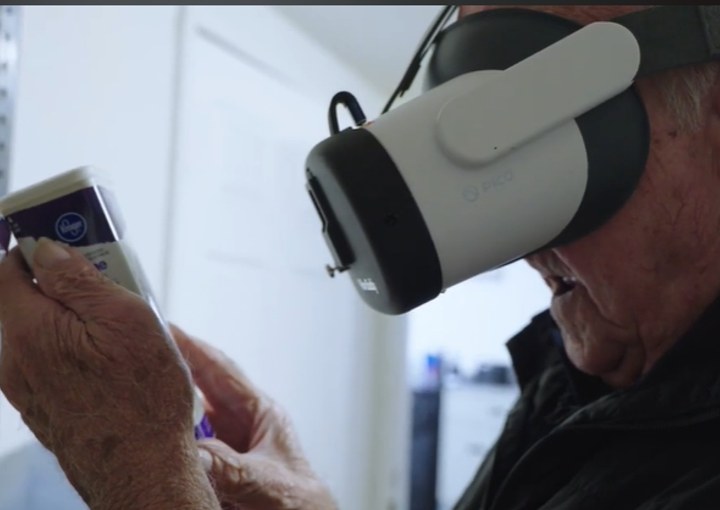
Vision Buddy customer Thomas Altom, who lives with macular degeneration, described the everyday impact of this kind of technology directly, in his own words: “With Vision Buddy I can read the labels on my medication. This device is actually my buddy.”
What AI Glasses Cannot Do, Because Honesty Matters Here
We think it is important to be upfront about this rather than let marketing language get ahead of reality. No device, no matter how advanced, reverses macular degeneration or restores vision that has already been lost. That is simply not how any of this technology works, and anyone who claims otherwise is not being straight with you.
What these devices actually do is make the absolute most of whatever vision remains, primarily peripheral vision along with whatever central vision is still there, using magnification, contrast enhancement, and alternative formats like audio or text conversion. Anyone considering a device like this should go in with that realistic expectation from the start, rather than one shaped purely by marketing copy or wishful thinking.
Setting that expectation early actually tends to lead to better outcomes, because people are not disappointed by something the device was never designed to do in the first place. They are pleasantly surprised by what it actually does accomplish.
Who Tends to Benefit the Most
Based on how macular degeneration typically progresses, certain people tend to see more benefit from this kind of device than others. Generally speaking, the best fit tends to be someone who:
- Still has some amount of functional central vision remaining, which is more common in early to moderate stages of the condition.
- Struggles most specifically with reading, watching television, and recognizing faces, rather than broader mobility or navigation challenges.
- Would genuinely prefer a single, all in one device over juggling several separate tools for different tasks throughout the day.
If none of that quite matches someone’s situation, that is useful information too. It might mean a different category of device, or a combination of tools, makes more sense. For more on how AI glasses work as a broader category, including the actual research and clinical evidence behind them, take a look at our companion piece, “Can AI Glasses Really Help Low Vision? What Research and Real Users Say.”
Frequently Asked Questions
Does macular degeneration always lead to complete blindness eventually?
No, and this is a common misconception worth clearing up. Macular degeneration typically affects central vision while largely sparing peripheral vision. Complete vision loss is not the typical progression for most people, though the exact degree of impact does vary quite a bit from person to person, and also depends on which type is involved (dry versus wet macular degeneration).
Can AI glasses help with both dry and wet macular degeneration?
The technology itself works the same way regardless of which type someone has. It magnifies and enhances whatever central vision remains, addressing the functional, day to day impact rather than the underlying medical cause. For the medical side of things, a retina specialist is really who should be consulted directly.
How do I know if my specific stage of macular degeneration is a good fit for this kind of device?
Honestly, this is worth discussing directly with a low vision specialist, or simply trying a device that offers a real trial period. Remaining vision can vary quite a bit even between two people at what looks like the same diagnosis stage, so a conversation or a hands on trial tends to tell you more than any general guideline ever could.
Want to See if It’s a Fit
If you are trying to figure out whether this kind of device makes sense for your specific situation, or for a parent or spouse you are researching on behalf of, download our free Caregiver’s Guide for a deeper breakdown.