

Summary
Retinitis pigmentosa (RP) is a group of inherited conditions that gradually break down the retina’s light-sensing cells, usually starting with night vision and peripheral vision before affecting central vision later on. There’s no cure yet, but there’s real, active research, and there’s a meaningful amount assistive technology can do right now to help with the everyday impact. This guide covers what’s actually happening medically, in plain language, and what to look for.
What Retinitis Pigmentosa Actually Is
Retinitis pigmentosa is not one single disease but a group of inherited genetic conditions that cause the retina’s photoreceptor cells, the rods and cones that detect light, to break down over time. Rod cells, which are responsible for vision in low light and peripheral vision, are typically affected first. That’s why one of the earliest and most consistent symptoms is difficulty seeing in dim light or at night, often called night blindness.
RP is genetic, meaning it’s passed down through families, though the specific inheritance pattern (and the exact gene involved) varies from person to person. It’s considered a rare disease, but it’s also one of the more common causes of inherited vision loss.
Why Night Vision Goes First
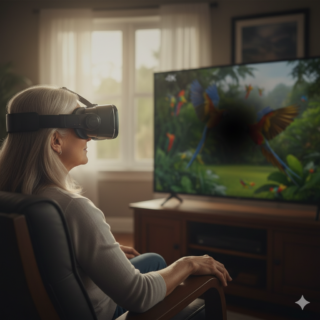
Rod cells vastly outnumber cone cells in the retina and are concentrated more toward the outer edges, which is part of why RP’s earliest symptoms tend to be night blindness and a narrowing field of peripheral vision, sometimes described as “tunnel vision.” Someone in the early stages might notice they’re bumping into furniture in a dim room, struggling to adjust when walking from a bright space into a darker one, or having a harder time driving at night well before any change in their daytime central vision.
This pattern, night and side vision affected first, central vision often preserved much longer, is one of the more distinctive features of RP compared to conditions like macular degeneration, which typically affects central vision first while sparing peripheral vision.
How the Condition Tends to Progress
RP is progressive, meaning it typically worsens over time, though the pace varies enormously from person to person and depends on the specific genetic form involved. Some people experience a slow decline over decades. Others progress more quickly. As rod cell loss continues, the field of usable vision can continue narrowing, and in some cases, central vision is eventually affected as well.
Because the pace and pattern are so individual, regular monitoring with a retina specialist matters, both to track changes and to stay connected to current research and potential treatment options.
What Current Treatment Research Looks Like
There is currently no cure for retinitis pigmentosa, but it’s an active area of medical research, including gene therapy approaches (a specific gene therapy has been approved for one particular genetic form of RP, with research ongoing into others), retinal implants, and various approaches aimed at slowing progression. This is a fast-moving research area, so specifics change. A retina specialist or genetic counselor familiar with inherited retinal disease is the right source for what’s currently available for a specific genetic diagnosis.
What Actually Helps Day to Day
While medical research continues, assistive technology addresses a different, very real problem: making the most of the vision that remains, right now. For RP specifically, that usually means:
- Lighting adjustments, since night blindness is often the earliest and most disruptive symptom, better home lighting and avoiding sudden bright-to-dark transitions can meaningfully help.
- Orientation and mobility training, which teaches practical strategies for navigating safely as peripheral vision narrows.
- Magnification and contrast tools, useful once central vision is affected, for the same reasons they help with conditions like macular degeneration.
- Wide-field awareness tools, since RP’s core challenge is a narrowing field of view rather than blurred central vision.
What to Look for in Assistive Technology
Because RP’s earliest and most persistent challenge is usually peripheral vision and low-light function rather than central detail, it’s worth being specific when evaluating any device: ask directly whether it’s actually designed with peripheral vision loss and low-light situations in mind, not just central vision magnification.
Vision Buddy’s live camera magnification and contrast enhancement, along with TV streaming and OCR-based reading assistance, are built around the kinds of everyday tasks that become harder as any low vision condition progresses, including RP. As with any device, a real trial period matters here more than anywhere: a fourteen-day, in-home trial (Vision Buddy’s runs $100 plus a refundable $1,000 security deposit, with support included throughout) lets you judge fit against your actual day-to-day experience rather than a product description.
Frequently Asked Questions
Is retinitis pigmentosa the same as macular degeneration?
No. They’re different conditions with different patterns. RP typically affects night vision and peripheral vision first, while macular degeneration typically affects central vision first and spares peripheral vision much longer.
Is retinitis pigmentosa always inherited?
Most cases are genetic, though the specific inheritance pattern varies. A genetic counselor can help clarify a specific diagnosis.
Does retinitis pigmentosa always lead to total blindness?
Progression varies significantly by person and genetic form. Many people retain some functional vision for decades. A retina specialist is the best source for an individual outlook.
Can assistive technology help before central vision is affected?
Yes, lighting adjustments, orientation and mobility training, and wide-field awareness tools can meaningfully help with earlier night-vision and peripheral symptoms.
What to Do Next
If you or someone you love is navigating a retinitis pigmentosa diagnosis and wondering what kind of assistive technology might actually help, the lowest-risk way to find out is a real, in-home trial.